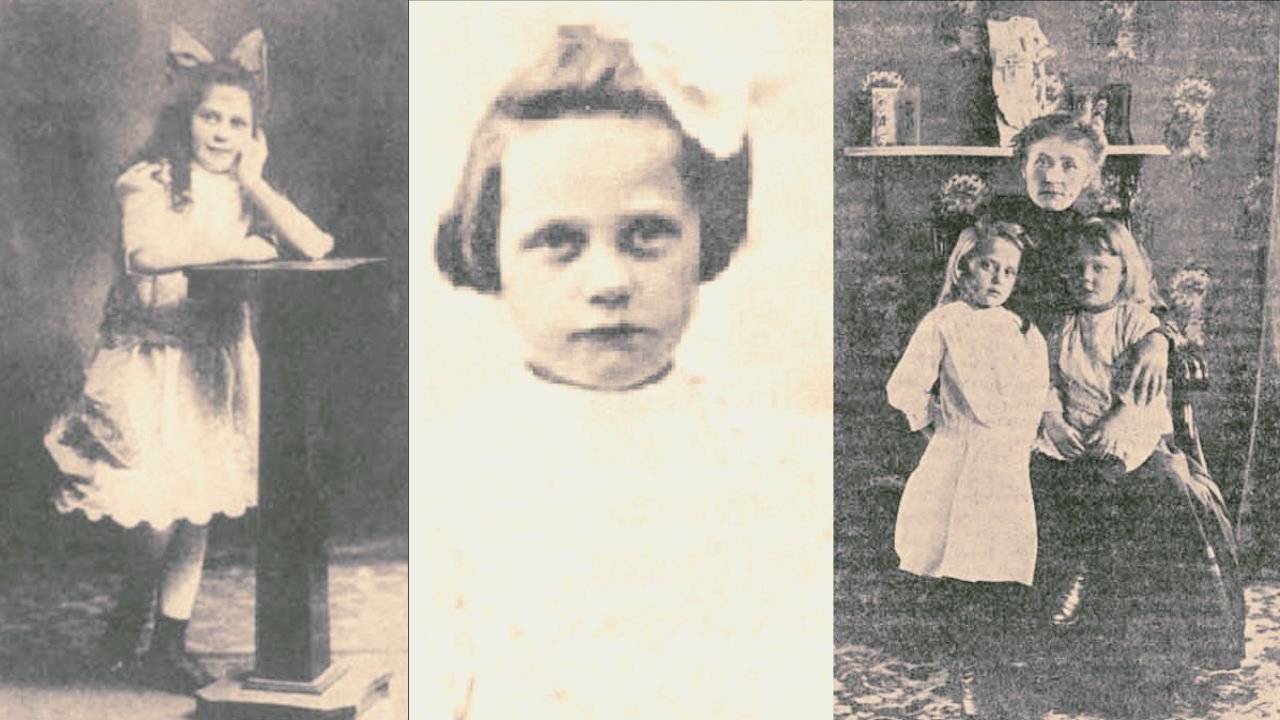
When Lillian Gertrud Asplund died on 6 May 2006 at age 99, the world lost something that could never be replaced. She was the last known survivor of the Titanic who could actually remember what happened that night. And unlike many people connected to famous events, she never sought attention for it. She simply lived a quiet, private life in Massachusetts — and the history lived with her.
This article covers who Lillian Asplund was, where her family came from, what happened to them aboard the Titanic, how she survived, and what she remembered about that night.
Who Was Lillian Gertrud Asplund?
Lillian Gertrud Asplund was born on 21 October 1906 in Worcester, Massachusetts. Her parents, Carl and Selma Asplund, were Swedish immigrants who had settled in the United States before she was born.
For most of her working life, Lillian was employed as a secretarial worker. She was not a public figure. She gave very few interviews and did not seek media attention. She lived in Massachusetts for the rest of her life, eventually in the town of Shrewsbury, where she died at 99 years old.
Her connection to the Titanic is the reason her name is remembered today. She is widely described as the last American survivor of the Titanic. More specifically, she was the last survivor of any nationality who had actual personal memories of the sinking. The handful of survivors who outlived her had all been infants at the time, too young to recall anything firsthand.
A Swedish-American Family on a Transatlantic Return
To understand why the Asplund family was on the Titanic, you need a little background on Swedish immigration to the United States in that era.
In the late 19th and early 20th centuries, large numbers of Swedish families emigrated to North America in search of better opportunities. Many settled in states like Minnesota, Illinois, and Massachusetts. Carl and Selma Asplund were part of this wave. They had made their home in Worcester, Massachusetts, where Lillian was born.
In the spring of 1912, the family had traveled back to Sweden for a visit. This was a fairly common pattern among immigrant families of the period. They maintained strong ties to their homeland, and when finances allowed, they would make the transatlantic crossing to visit relatives.
When it was time to return to the United States, they boarded the RMS Titanic. As a working-class immigrant family, they traveled in third class, also called steerage. This was the standard and most affordable option for families like theirs. It was a detail that would matter enormously in the hours ahead.
The Asplund Family Aboard the Titanic
The full Asplund family party on board the Titanic included Lillian, her father Carl, her mother Selma, and four brothers. Among those brothers was Lillian’s twin.
Lillian herself was five years old at the time of the disaster. The Titanic struck an iceberg late in the night of 14 April 1912 and sank in the early hours of 15 April.
Three members of the family survived: Lillian, her mother Selma, and her younger brother Edvin Rojj Felix, known as Felix, who was around three years old at the time.
Lost in the sinking were Lillian’s father Carl and three of her brothers, including her twin. The loss of a father and three children from one family gives a sharp, human dimension to a disaster that is often described only through statistics.
Third-class passengers faced particular disadvantages that night. Their cabins were located deeper in the ship, far from the upper decks where the lifeboats were. Getting from those lower levels to the boat deck took time and navigation that many passengers, especially those unfamiliar with the ship’s layout, could not manage quickly enough. The survival rate for third-class passengers was significantly lower than for those in first class.
What Lillian Remembered About the Night the Ship Sank?
What made Lillian historically significant — beyond simply surviving — was her age. At five years old, she was old enough to hold onto real, personal memories of the event. Infant survivors had no such recollections to share.
According to documented accounts, Lillian remembered being woken by her father after the Titanic hit the iceberg. The family dressed and made their way up to the deck. The specific detail she recalled most clearly was being passed through a “window” — later identified as an opening along the First Class promenade deck — and placed into a descending lifeboat. She also remembered looking back up at the ship as the lifeboat moved away.
These are the kinds of fragmentary, vivid images that make sense for a young child’s memory. Not a full narrative, but specific sensory moments: the movement, the dark water, the sight of the ship above her.
Lillian, her mother Selma, and her brother Felix were placed in Lifeboat 15, one of the starboard-side lifeboats. They were among those rescued after the ship went down.
Life After the Titanic
After surviving one of the most famous maritime disasters in history, Lillian Asplund returned to a thoroughly ordinary life — and by all accounts, that was exactly what she wanted.
The surviving members of the Asplund family settled back in Massachusetts. Lillian worked as a secretarial worker and did not pursue any kind of public role. She and her mother were both known to have avoided speaking about their experiences. The disaster had taken her father and three brothers, including her twin, and she did not invite public attention to that grief.
This made her different from many people connected to famous historical events. There was no memoir, no speaking tour, and no regular media appearances. She simply lived her life.
As the years passed and other survivors died one by one, Lillian’s historical position became more defined. By the time of her death in 2006, she had outlived virtually every other Titanic survivor. The two survivors who died after her — Millvina Dean and Barbara West Dainton — had both been infants on the night of the sinking and had no personal memories of it.
That distinction — being the last person alive who actually remembered the Titanic disaster — is what gave Lillian her unique place in history.
How the World Remembered Her?
When Lillian Asplund died on 6 May 2006 in Shrewsbury, Massachusetts, news outlets around the world marked her passing. Obituaries in the United States, Germany, Poland, and Sweden all described her death as the closing of a living chapter of Titanic history.
Publications like the Arizona Daily Star and Der Spiegel both noted that she was the last American survivor and the last with confirmed personal memories of the disaster. Swedish sources reflected on her story as part of the broader history of Swedish-American immigration, with some genealogical sites describing her as a notable svenskamerikan — a Swedish-American.
She was also remembered in Shrewsbury itself, where local historical records document her as a notable figure in the community’s past. For readers interested in how individual family histories connect to larger events, resources like Daily Business Goal and similar publications often explore how personal stories intersect with historical moments in ways that broader narratives miss.
None of the coverage suggested she ever sought this recognition. The attention came to her simply because she had survived something historic, and because she had lived long enough to be the last one standing who could say: I was there, and I remember.
A Quiet Life Behind a Famous Disaster
Lillian Gertrud Asplund’s story sits at an unusual intersection. She is connected to one of the most written-about events in modern history, yet she herself was a private person who worked an ordinary job and chose to stay out of the public eye.
Her family’s story also reflects something important about who was on the Titanic. It was not only wealthy travelers in first-class cabins. It was immigrant families in third class, returning home to their adopted country after visiting the land they had left behind. Families like the Asplunds were part of a much larger human story about migration, hope, and loss.
Lillian survived. She carried those memories for 94 years after the sinking — the sight of her father waking the family, the chaos on the decks, being passed through a window into a lifeboat, and looking up at the ship she had just escaped. When she died in 2006, that living memory of the Titanic’s final hours went with her.
Also Read:

