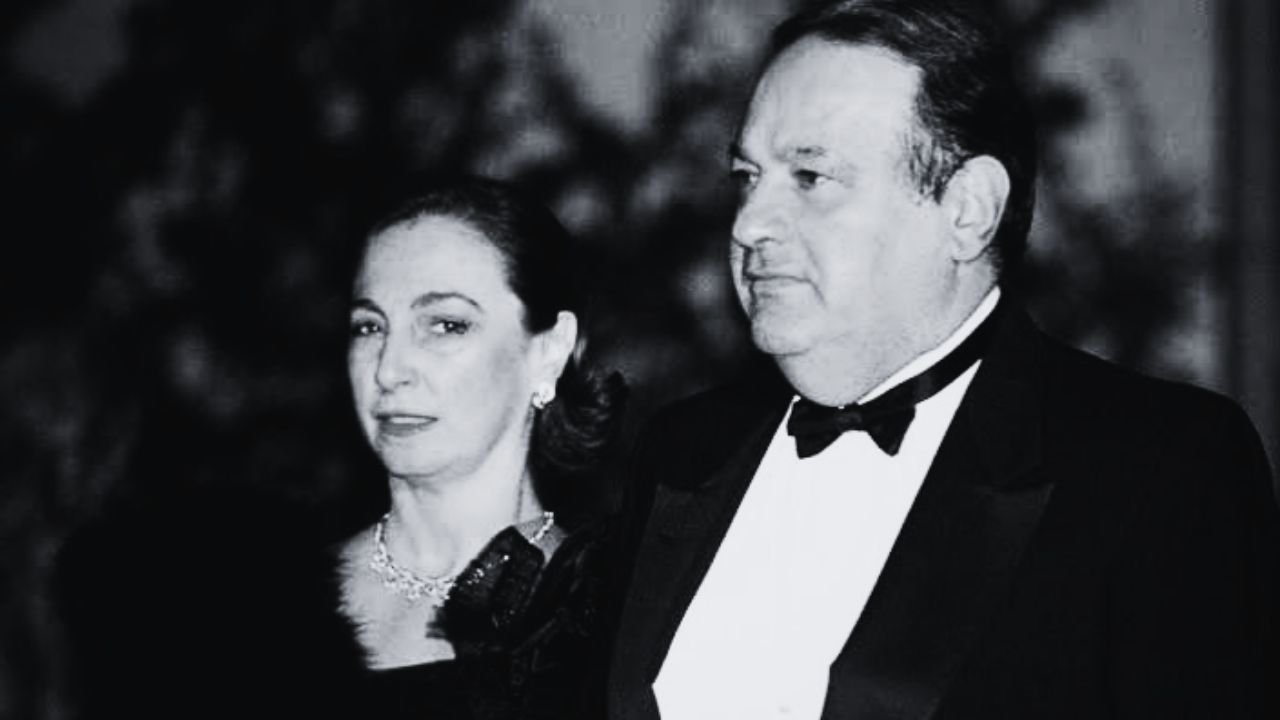
Millions of people have walked through Museo Soumaya in Mexico City. It is one of the most visited museums in Latin America. But most visitors know very little about the woman whose name is on the building.
Soumaya Domit Gemayel was not a public figure in the way her husband, billionaire Carlos Slim Helú, became one. She did not run companies or give press conferences. She raised six children, supported cultural and educational causes, and quietly pushed for organ donation awareness in Mexico after living with kidney disease herself.
This article covers what is publicly known about her — her Lebanese-Mexican background, her marriage to Carlos Slim, her family, her health challenges, and the legacy she left behind when she died in 1999.
Her Family Background and Lebanese-Mexican Roots
Soumaya Domit Gemayel was born on 11 February 1948 in Mexico City. Her parents were Antonio Domit Dib and Lily (Lili) Gemayel, both of Lebanese origin. Like many Lebanese families who settled in Mexico during the 19th and 20th centuries, her family was part of a broader diaspora community that grew to have real influence in Mexican commerce and culture.
She grew up in a Lebanese Catholic household in Mexico City. Family values and community ties were central to that world, and by most accounts, those values stayed with her throughout her life.
Her mother’s surname, Gemayel, has drawn attention over the years. Some informal sources and social commentary have described her as a cousin of former Lebanese presidents Bashir Gemayel and Amine Gemayel. This claim appears in genealogical discussions and is placed within Gemayel family tree records. However, it has not been confirmed through official biographical sources, so it is worth treating as a widely repeated claim rather than an established fact.
Her Marriage to Carlos Slim and Their Life Together
Soumaya met Carlos Slim when they were both young. One Spanish-language profile notes that Slim was 24 and she was around 15 when they first met. They married a couple of years later.
The exact year of their marriage is reported slightly differently across sources. Some place it in 1966, others in 1967. Both versions appear in credible publications, so neither should be treated as the settled date. What most sources agree on is that they were married for approximately 33 years, until her death in 1999.
Together, they had six children:
- Carlos Slim Domit
- Marco Antonio Slim Domit
- Patrick (Patricio) Slim Domit
- Soumaya Slim Domit
- Vanessa Slim Domit
- Johanna Slim Domit
Multiple profiles describe her as Carlos Slim’s “perfect adviser” — someone he trusted deeply and turned to during the years he was building his business empire. She did not hold any formal corporate role. She was, by all accounts, a private family figure who shaped the household and, many say, the values that drove Slim’s broader philanthropic decisions.
After her death, Slim spoke of her in terms that made clear how central she was to his life. Several biographies note that he has called her the most important person he ever knew. That is saying something for a man who once ranked as the wealthiest person in the world.
Her Philanthropic Work and Organ Donation Advocacy
Soumaya was not simply defined by her role as a spouse. Spanish-language biographies describe her as a genuine philanthropist — someone who supported students and artists, helped fund educational projects, and acted as a patron to people who needed a push to pursue their creative or academic goals.
But her most personal cause came from her own health experience.
She lived with chronic kidney disease for much of her adult life. Rather than keeping that struggle private in every sense, she channeled it into something practical. She reportedly wrote manuals on organ donation and worked to support greater awareness and legal frameworks around donation in Mexico. This was not abstract charity work — it came directly from what she had experienced.
It is a clear example of how a personal health crisis can lead someone to push for real change. She understood organ donation from the inside, and she used that understanding to advocate for others who were facing the same uncertainty.
It is worth being careful here: while sources describe her as a strong advocate who wrote educational materials and supported legal frameworks around donation, there is no clear documentation that she authored specific legislation. Her role is best understood as one of advocacy and public education.
Her Health and Death in 1999
Soumaya’s health struggles were long-standing. Several accounts indicate she underwent a kidney transplant around age 30. Chronic renal disease continued to affect her in the years that followed.
She died in March 1999 in Mexico City, in the Miguel Hidalgo district. She was around 50 or 51 years old. The most consistently cited Spanish-language sources point to renal insufficiency — complications related to her long history of kidney disease — as the cause of death. The El CEO profile specifically notes the date as 7 March 1999, while FamilySearch records list 9 March 1999. The slight difference may reflect when the death was registered versus when it occurred.
Some English-language blog posts and narrative sources have cited cancer as the cause of death. This appears to be a discrepancy — possibly a confusion with another illness or a simplification by sources that did not consult the original Spanish-language biographical material. The more detailed and sourced accounts consistently point to chronic kidney disease and renal failure.
Readers who come across both versions should know that the kidney disease explanation has stronger backing in the primary sources.
Museo Soumaya: A Memorial That Millions Visit
The most visible part of Soumaya Domit Gemayel’s legacy is the museum that bears her name.
Museo Soumaya in Mexico City is a large art museum housing part of the Slim family’s extensive art collection. The museum is free to the public, and it has been described as a gift to the people of Mexico made in her honor. The Slim family first opened a version of the museum in the 1990s — with some sources placing the founding around 1994, a few years before her death. The building that most people recognize today, with its distinctive curved aluminum exterior in the Nuevo Polanco neighborhood, opened in 2011.
The museum’s name is a deliberate tribute. It keeps her memory present in a very public way, even though she herself was a private person. Millions of visitors encounter her name every year without necessarily knowing anything about who she was.
Her children and Carlos Slim have continued cultural and philanthropic work through the museum and related foundations. In that sense, the causes she cared about — arts, education, community — are still being carried forward.
Why Her Story Still Matters
There are a few reasons why people still search for Soumaya Domit Gemayel, decades after her death.
Some are curious about the woman behind one of the world’s most famous billionaires. Others are tracing Lebanese-Mexican family history and come across the Domit or Gemayel names in genealogical records. Still others want to understand what the museum name actually means and who it honors.
For those interested in the Lebanese diaspora, her story fits into a larger picture of how Lebanese families built lives across Latin America and contributed to the communities they joined. For those interested in Carlos Slim’s story, she is a central figure — not in the business chapters, but in the human ones.
She is also an example of something that does not get discussed as often as it should: the way private individuals, especially in family roles, shape philanthropic priorities and cultural institutions that outlast them. The Daily Business Goal has covered how legacy-building often happens quietly, through relationships and values rather than formal titles or public roles.
Soumaya Domit Gemayel fits that pattern exactly. She did not lead a corporation. She did not hold office. But a major museum carries her name, and the philanthropic directions of one of the world’s largest family fortunes reflect, in part, the values she held and the causes she cared about.
That is not a small legacy. It is just a quiet one — which, in its own way, makes it worth knowing about.
Also Read:

